
Tiles for a digital age: Space to dream
The roots of glass tiles can be traced to the Byzantine mosaic tradition, but glass tiles are proliferating in the digital age for entirely modern reasons. Modern glass tiles reflect our use of lit screens, and fulfill what writer Melinda Davis describes as the "New Primal Desire – the quest for the imaginational experience.” 1
Showrooms

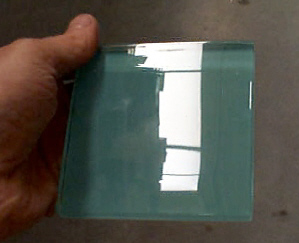
Texas Hill interior designer Rahnee Gladwin works exclusively with tile and stone. “Light can come off glass tiles as if they were backlit,” she explains, “giving the kind of warmth we associate our modern electronic fireplaces, that is, our conventional television screens or LCD monitors. People are naturally drawn to them because of familiarity, and because they are used to looking at light in this way.”
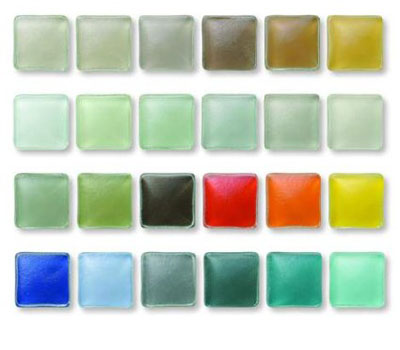
Glass is extremely versatile: the types, shapes, colors and textures of tiles made of glass are potentially limitless. It is probably not coincidental, then, that as the economy moves from mass marketing to consumer-driven, customized demand, we see more glass tiles, and more varieties.
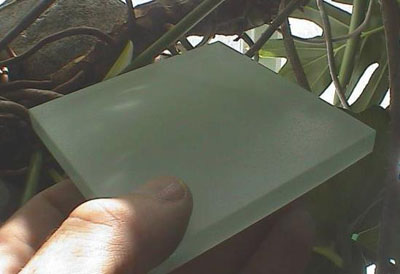
The surfaces of many fused and cast glass tiles are also distictively watery and indefinite; compared to the bluntness of an opaque boundary, these tiles give us a sense of the inchoate, a sense of possibility.
Like the digital age itself, glass can delimit the walls that hold us, open us to a world of seemingly unlimited choice, and give us space to dream.
Sources
- 1 Melinda Davis, The New Culture of Desire. Free Press, 2002.

